


10 Things to Consider Before Buying A Rural Property
- Catherine van Warmerdam

- Dec 15, 2018
- 6 min read
Updated: Dec 18, 2018


We love our rural property and our old home, but there are many, many things we wish we had known before we took the leap. Learn from our mistakes! In this post, I’ll share 10 things we wish we had considered and planned for when buying our home, and give you some questions to ask yourself before you buy. This will save you so much time, money, and energy!

1) Property Maintenance
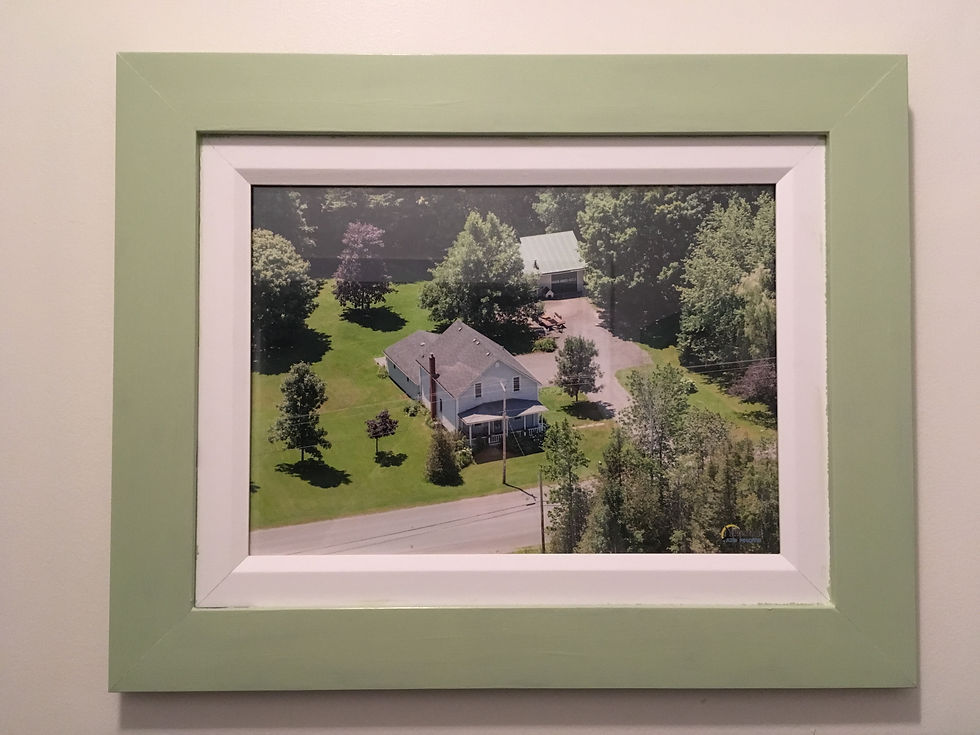
When we bought our almost-acre of land, we underestimated how much work it would be just to maintain the land around our house. We quickly learned that we needed to stay on top of mowing the lawn and keeping the driveway clear in the wintertime. Our property also isn’t fenced, and as it fronts on a main road, we had to weigh up whether or not we could afford to fence in the property, and if this was a priority for us.
Questions to ask:
How big is the property you are buying?
How big is the yard?
How big is the driveway?
Will you need a push mower or a ride-on lawnmower?
What about a snow blower or snowplow?
Are you physically able to do those things?
Do you want to hire a property maintenance company to do those things for you? What about fencing? Will you have animals?
Do you have the money to invest in these things, on top of your mortgage?

2) Condition of Buildings
Rural properties often have older buildings on them. We chose to have a home inspector come in and do an assessment on our house. He looked for things like the foundation, leaks, mold, asbestos, knob and tube wiring, etc. We found that the roof would need to be replaced soon, and that there were some leaks in the foundation. However, the rest of the house was in good condition, so we felt we could handle these issues.
So far, we have invested in:
- Weather stripping doorways
- Switching from an asphalt roof to metal
- Blowing in more attic insulation
- Working towards sealing foundation leaks, laying down vapour barrier, and spray foaming insulation in our basement
Questions to ask:
How many buildings are there?
What upgrades will they need?
What is the foundation like?
Are the windows and doors well insulated?
Is there sufficient insulation in the attic and the walls?
What condition is the roof in?

3) Work Commute
The location of our home originally represented a halfway point – the commute to work for both my husband and I was about equal. He worked westward, in the big city, while I worked eastward, in a small university town. The area where our home is located was perfect for both of us. I later left that job to work from home, so now my commute is really just to the kitchen for coffee! My husband, however, still has to contend with busy highways and snowy roads. We make sure to keep the driveway clear in the wintertime, and keep emergency bags in our cars that include blankets, hand warmers, extra clothes, flashlights, batteries, etc.
Questions to ask:
How far away is your workplace?
Do you often travel for work?
Are you able to work from home?
Will weather or road conditions impact your commute?
What can you do to prepare for complications to your commute?
What will the wear and tear be like on your vehicle? What are those costs?

4) Phone & Internet Service
The previous owners had left us a note mentioning their Internet provider, so we knew that Internet access was possible. What we didn’t know, however, was that (expensive) satellite Internet would be our only option for a few years. We live in a swampy valley full of trees, making it difficult to receive a signal on our property. I recommend that when you visit a potential house, you check your phone for data and Internet signals to see if they are working.
Questions to ask:
Do you want to have a landline?
Do you want to have cable?
What type of Internet is available? (Satellite, cable, dial-up, fiber, etc.)

5) Well & Septic
We both came from homes in large municipalities that were serviced with water and sewage, so learning about well and septic systems was new to us. The good news was that we no longer had a water bill to pay – but we also had to learn about and maintain our own systems. Luckily for us, we live in Canada, which has an abundance of water. We also live in a swampy area and have a very deep well, so our well has never gone dry.
Our septic tank had been last pumped the year before we moved in, so we pumped it again recently. We learned that septic tanks have to have active bacteria in order for them to work properly. We chose to limit our use of antibacterial cleaners and chose a septic-safe laundry detergent to make sure our septic was working properly and our water supply was safe.
Questions to ask:
What kind of well is it?
How deep is the well?
Has it ever run dry?
Is there a lot of water in the local area?
Where is the septic tank?
When was the last time it has been pumped?
How many people will be living in the home and using the septic system?
What kinds of products can you use to be friendlier to your septic system and water supply?

6) Garbage Disposal & Recycling
If you come from a big municipality, you may not consider the fact that you may not have curbside pickup. We currently do not, and have to drive our waste and recycling to a nearby Transfer Station. This means that we often don’t go weekly, and our recycling piles up quickly in the garage. It also means that you have to load your car up full of garbage that has been sitting around for a while. Whoever, interacting with your waste is a great way to become aware of how much you produce, and can inspire you to produce less.
Questions to ask:
Is there curbside pickup available at my home?
Do I have protected space for garbage and recycling bins?
Where is the nearest transfer station or landfill?
Is municipal composting available?
What do I do with yard waste, e-waste, renovation waste and hazardous waste?
Can I compost in my backyard?
What can I do to reduce waste?

7) Energy & Fuel Sources
Consider your energy sources and the costs associated with them. Our home is currently heated by an oil furnace, which has several downsides. Its not particularly efficient, is detrimental to the environment, costs can fluctuate wildly, and I just don’t like having a tank of flammable fluid sitting in my basement. While it can be expensive to switch fuel sources, it can pay off in efficiency and cost savings.
Questions to ask:
What is the current fuel/energy source for the house?
What type of energy source heats the home? (Electric, natural gas, propane, oil, wood stove, etc.)
How old is it? When was the last time it was serviced?
Is there air conditioning?
How old is the unit? When was the last time it was serviced?
Is there electricity available in the outbuildings?

8) Postal Service
Postal service is another thing not to take for granted. We are one of only two houses on our section of road that has a curbside mailbox – everyone else has to visit the local ‘super box’ or P.O. box to get their mail. You also may want to consider the ease of delivery if you order things online. For example, if I order something through Canada Post and am not home to receive the package, the nearest office is only about 5 kilometers away. If I order something through Purolator, the nearest office for pickup is a 30-minute drive. Food for thought!
Questions to ask:
Do you have a mailbox at the end of your driveway?
Do you have a super box nearby that your can walk to?
Where is the nearest post office?
Where will packages go if you aren’t home to receive them?
9) Municipal By-Laws
When we bought this property, we had big dreams of keeping bees and branching out to other animals, such as chickens and goats. However, a year or two into our home-owning adventure, we learned that although our property is rural and surrounded by farms, our municipality has by-laws that prevent us from having animals. Our individual property is zoned as “residential”, and only properties zoned as “agricultural” are able to have animals. That being said, bees aren’t technicallyanimals…and many other small properties around us have backyard chickens. The City of Toronto actually has a backyard chicken pilot program, so I find it hard to believe that chickens aren’t allowed in my small hamlet of less than 100 houses.
Questions to ask:
Where can I find more information about my municipality?
How can I find out how my property is zoned?
What are my plans and expectations for this property?
Do I want to have animals?

10) Emergency Preparedness
Let’s not hope for the worst, but it might be a good idea to think about it. Our area is prone to flooding, so we have invested in a good sump pump to take care of any potential water in our foundation. We keep flashlights, candles, and blankets available in case of a power outage. We also try to stock up on staples and non-perishable food items when they are on sale.
Questions to ask:
How can I prepare for emergencies?
Where is the nearest grocery store?
Is there storage space in my home for staple/non-perishable foods?
What type of natural disasters (forest fires, flooding, tornados) can happen?
So if you’re on the market for a little piece of paradise, I hope this helps you in your search. Current rural homeowners, is there anything I have forgotten? Please pass this post on to anyone you know that’s thinking of country living.
All the best,
Catherine
Comments